Características destacadas
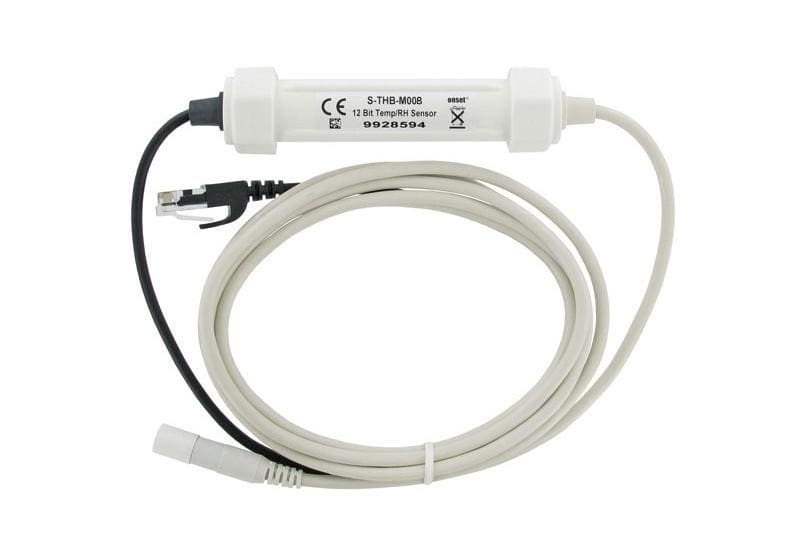
Sensor inteligente
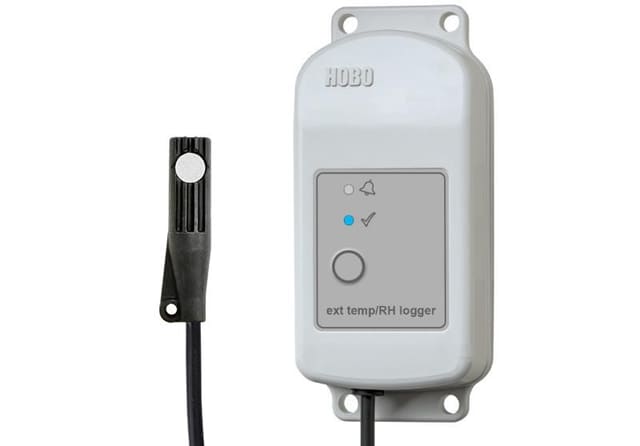
Funciona con todos los registradores que aceptan entradas de Smart Sensor
Comunica automáticamente los datos de configuración al registrador
El sensor S-THB-M002 soporta las siguientes mediciones: Humedad y temperatura relativa
Measurement Range
Temp: -40°C to 75°C (-40°F to 167°F)
RH: 0-100% RH at -40° to 75°C (-40° to 167°F); exposure to conditions below -20°C (-4°F) or above 95% RH may temporarily increase the maximum RH sensor error by an additional 1%
Accuracy
Temp: +/- 0.21°C from 0° to 50°C (0.38°F from 32° to 122°F)
RH: +/- 2.5% from 10% to 90% RH (typical), to a maximum of +/- 3.5% including hysteresis at 25°C (77°F); below 10% and above 90% ±5% typical
Resolution
Temp: 0.02°C at 25°C (0.04°F at 77°F)
RH: 0.1% RH
Bits Per Sample
Temp: 12
RH: 10
Drift
Temp: < 0.1°C (0.18°F) per year
RH: < 1% per year typical
Response Time (typical, to 90% of change)
Temp: 5 minutes in air moving 1 m/sec
RH: 5 minutes in air moving 1 m/sec with protective cap
Operating temperature range: -40°C to 75°C (-40°F to 167°F)
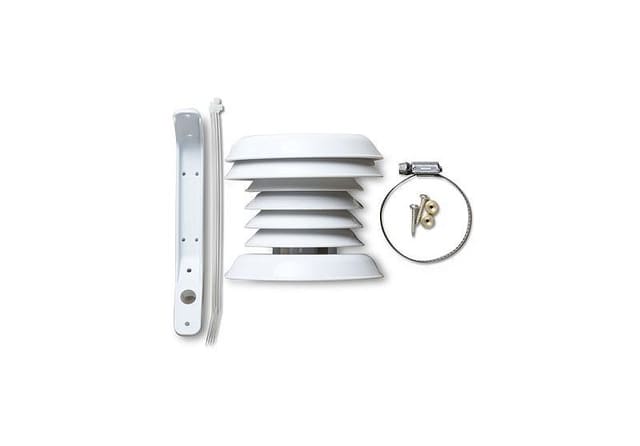
Environmental rating weatherproof: 0 to 100% RH intermittent condensing environments. For best results, the Temp/RH Smart Sensor should be mounted inside a protective enclosure, such as a solar radiation shield.
Housing PVC cable jacket with ASA styrene polymer RH sensor cap; modified hydrophobic polyethersulfone membrane
Sensor dimensions: 10 x 35 mm (0.39 x 1.39 in)
Weight: 110 g (3.88 oz)
Number of data channels: 2
Measurement averaging option: No
Cable lengths available: 2.5 m (8.2 ft)
Length of Smart Sensor network cable: 0.5 m (1.6 ft)
Este producto cumple con la especificación CE EN61326 criterio C para ESD, criterio C para Inmunidad Radiada, criterio C para Transición Rápida, criterio B para Inmunidad Conducida, criterio A para Campos Magnéticos de Frecuencia de Potencia, y Grupo 1 de Emisiones Radiadas, Clase B. Para minimizar los errores de medición debidos a la RF ambiental, utilice la longitud de cable de sonda más corta posible y mantenga el cable de la sonda lo más alejado posible de otros cables.
Nota: El sensor requiere protección contra la lluvia o salpicaduras directas; el escudo contra la radiación (RS3) se recomienda encarecidamente para su uso a la luz del sol; los sensores pueden utilizarse en entornos de condensación intermitente de hasta 30°C y sin condensación por encima de 30°C.