
Temperature: what to define before logging starts
Location, sampling interval and data access: three decisions to prepare a temperature measurement campaign.
Start with the measurement question
A temperature series is more useful when it answers a specific question. Do you want to observe how a room changes during the day, compare locations or follow a process? Before choosing an instrument, write down the objective, expected duration and measurement points.
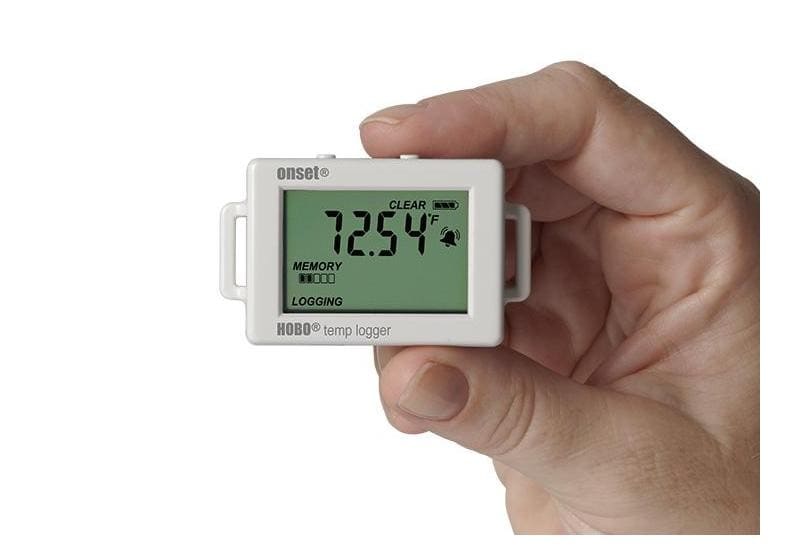
The catalogue presents the HOBO UX100-001 as a temperature data logger. It is a reference for exploring this family of instruments. The product page is the starting point for checking the characteristics of the version you need.
Define the instrument location
Describe the environment and mounting position. A point next to a window, air outlet or heat source represents different conditions from a point in the centre of a room. Record those conditions so the readings can be interpreted in context.
If the application requires an external probe, contact with liquids or outdoor installation, include that requirement in your enquiry. The description “temperature data logger” does not, by itself, establish suitability for all these environments.
Plan sampling and collection
Choose the logging interval according to the variation you want to observe and the length of the campaign. Check the documentation for available memory, battery life and how data are downloaded. These are points to check for the specific reference, not values shared by every logger.
Also prepare identifiers for the measurement points: location name, position, start date and person responsible for collection. These records help you compare series without mixing up instruments.
What to include in a quote request
- Measured variable and expected temperature range.
- Environment and installation position.
- Number of points and campaign duration.
- Sampling interval and how often data will be consulted.
- Probe, accessory and documentation requirements.
Read the product page below and add the reference to your quote list. The intended conditions of use allow the team to confirm the appropriate configuration before preparing a proposal.
Instruments for this application
LI-COR (HOBO, InTemp, LI-COR) · UX100-001
HOBO Temperature Data Logger
The HOBO UX100-001 Temperature data logger records temperature in indoor environments with its integrated sensor. The logger is ideal for monitoring occupant comfort in office buildings, tracking food storage conditions in warehouses, and logging temperature…
Keep reading
Week in review, 14 to 18 September 2026: your own point, the satellite and the laboratory curve
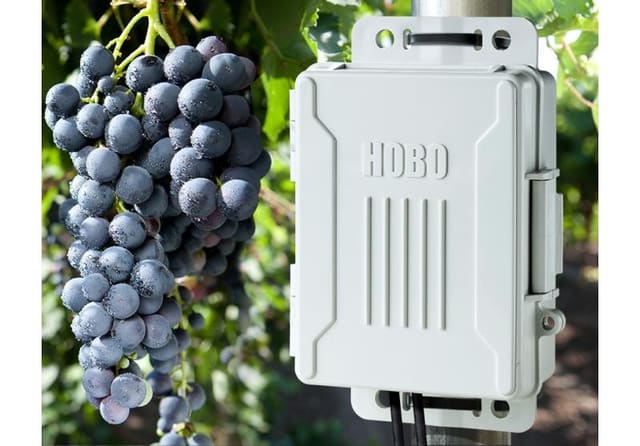
Three articles on what makes a number measured at one point trustworthy, three European signals from the week with their sources, and what is due in the coming days.
Field calibration or laboratory curve: what one study measured with soil moisture sensors
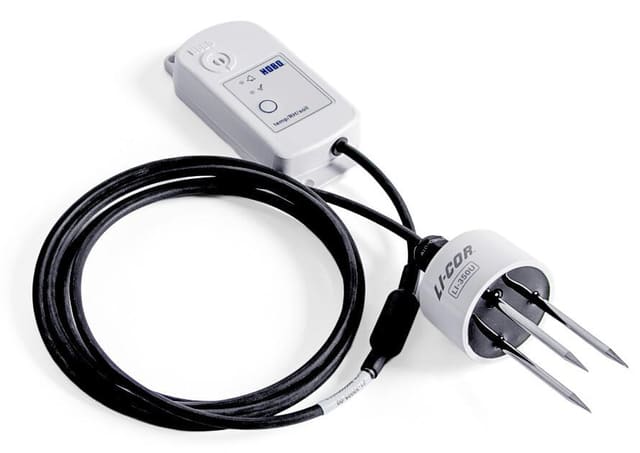
A study published in May 2026 calibrated low-cost capacitive sensors in the laboratory and then moved them to real plots. The laboratory curve drifted in the field, and a single reference measurement on site recovered much of the accuracy.
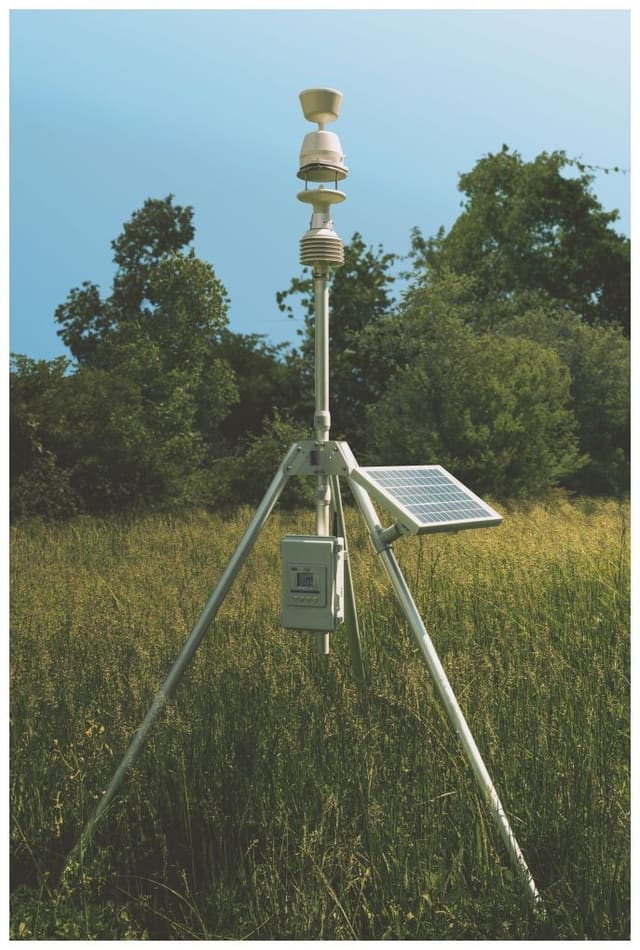
Sentinel-3C is in orbit: what a satellite measures and what your station still measures
On 15 September 2026 the European Union launched Copernicus Sentinel-3C. What it observes from 800 km, why land surface temperature is not air temperature, and what to log at your own point.