
Weather monitoring · Water · Rainfall · Installation and calibration
When it rains hardest, it misses most: height, calibration and maintenance of tipping-bucket rain gauges
A tipping-bucket rain gauge loses rain to wind and to its own mechanics, and the second loss grows with intensity. What four peer-reviewed studies say about installation height, dynamic calibration and maintenance.
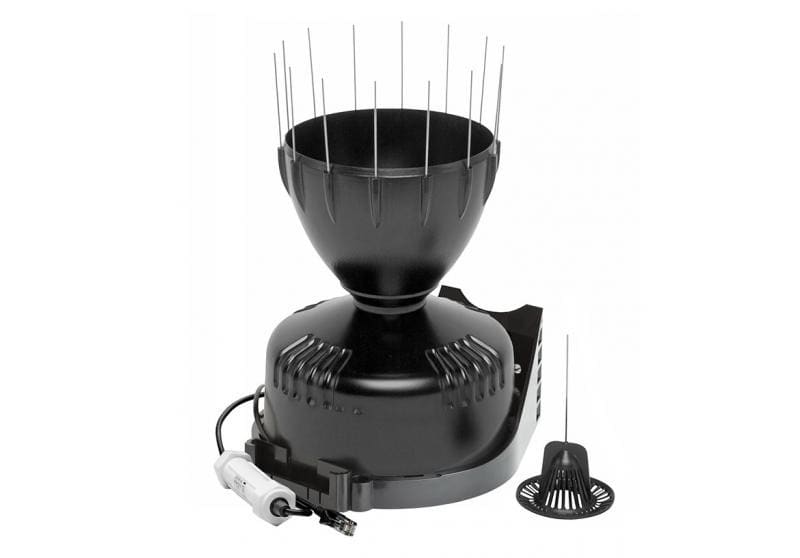
After a heavy downpour, the rain gauge on your plot shows less than the nearest station. It is not necessarily faulty. A tipping-bucket rain gauge carries two systematic errors that take rain out of the record: wind, which makes it catch less than actually falls, and its own mechanics, which leave water uncounted as intensity rises. Both push in the same direction, and the second weighs most in exactly the events that matter most.
So the decision is not only which model to buy. Three choices shape the whole series: where and at what height the gauge goes, how it is calibrated and how it is maintained. This guide brings together what four peer-reviewed studies say, one of them with thirteen years of data from a mountain catchment in central Spain.
Two losses in the same direction
A 2023 review from the Universidad Politécnica de Madrid identifies wind and mechanical biases as the main sources of error in these gauges. On wind, it summarises that it can cause an undercatch of approximately 2% to 10% for liquid precipitation and 10% to 50% for solid precipitation.
The mechanical error has a different origin. The bucket takes time to tip, and during that time water keeps coming in that is no longer counted. That loss depends on the flow leaving the funnel, which in turn depends on rainfall intensity. So it is not a fixed percentage: it grows as the rain gets heavier.
First decision: where, and at what height
Two field studies, both using ground-level gauges as the reference, put figures on what is lost when a gauge is raised.
At the Centre for Ecology & Hydrology station in Wallingford (Oxfordshire, United Kingdom), a study compared gauges at different heights from August 2015 to August 2018 against gauges of the same type set at ground level in 1.4 m by 1.4 m pits. At 0.3 m, the weighing gauge, the tipping-bucket gauge and the storage gauge caught on average 93.7%, 94.4% and 94.7% of the rainfall recorded at ground level. At 1.0 m, the weighing gauge caught 87.3%: an undercatch of 12.7%. Losses were largest in winter and smallest in summer, and in strong wind (above 4 m/s) the differences in catch were large. The authors note that the World Meteorological Organization (WMO) recommends that the gauge rim be as low as possible, but high enough to prevent splashing in from the ground.
A second study, from 2018 and also using a pit gauge as the reference, measured a mean undercatch of more than 23% for a conventional cylinder gauge at 0.5 m on an exposed upland site, against 9.4% on an exposed lowland site with lower average wind speeds. With an improved aerodynamic gauge shape, also at 0.5 m, the mean was 11.2% on the upland site and 3.4% on the lowland site. In a comparison at an upland site, two identical gauges at 0.5 m and 1.5 m lost on average 11.2% and 17.5%.
What this means for the decision:
- At Wallingford, against wind, height mattered more than gauge type. At 0.3 m the three types were within one percentage point of each other, while the weighing gauge went from 93.7% at 0.3 m to 87.3% at 1.0 m.
- Site exposure matters too. The same type of gauge lost far more on the windier site.
- Height is not changed without a written record. The Wallingford authors warn that changes not communicated to data users, or not corrected for, may complicate the detection of long-term changes in water balance.
Limitation: these are specific sites, each with its own wind regime. The percentages do not carry over as they are to another place; what carries over is the direction of the effect.
Second decision: static or dynamic calibration
Static calibration is the one manufacturers recommend, because it is the fastest and easiest: the gauge is levelled and the adjustable stop under the bucket is set until a given volume, added drop by drop, tips it. It assumes that this volume is constant whatever the intensity. The 2023 review treats it as a necessary first step to balance the two buckets and set the nominal volume, with an acceptable deviation of ±5%.
Dynamic calibration compares what the gauge records with known intensities, calculated from flow rates applied with a precision pump and a high-resolution balance, and derives a calibration curve. The EN 17277:2019 standard has standardised this type of calibration and classifies instruments into three performance classes, A, B and C. The WMO has also recommended an abbreviated procedure, using less water, for measuring the reference intensity in the field with a portable calibration device.
How much does it change the result? The study of the Venero Claro catchment, in the eastern Sierra de Gredos (15.53 km²), analysed thirteen years of data from ten tipping-bucket gauges and tested two commercial models with 0.2 mm resolution in the laboratory. Underestimation errors can be significant above 25 mm/h and increase nonlinearly with intensity. The authors identified two main causes: water entering while the bucket tips, and surplus water from the critical drop.
In the catchment, underestimation exceeded 6% (55 to 60 mm per year, depending on the comparison method) at Collado Morales, the area with the most high-intensity rainfall, and was about 1% at La Dehesa, the lowest area with the least high-intensity rainfall. For the two models tested, against traditional static calibration, dynamic calibration reduced error by more than 50% and the authors' semi-analytical methods by more than 40%.
Limitation: these are two specific models in one mountain catchment. Each model has its own curve, and how much the error weighs in the total depends on how much intense rain falls at each site. What holds in general is the consequence: when intensities or heavy events matter, static calibration on its own leaves exactly the loss from those events uncorrected. On a datasheet, the figure that matters here is the highest intensity for which the accuracy is stated.
Third decision: maintenance
The 2023 review lists other external losses: evaporation, wetting, splashing, funnel clogging and colonisation by animals or insects. The funnel can clog with dust, leaves and other debris deposited by the wind. The field maintenance it describes consists of cleaning the funnel and buckets, checking that the gauge is level and verifying dates and records; for the authors, proper installation, cleaning, levelling and calibration are mandatory for reliable measurements.
The same review notes that weighing gauges offer similar performance and are becoming popular because they need less maintenance. Switching type does not solve wind, though: at Wallingford the weighing gauge at 1.0 m lost 12.7%.
Checklist
- Rim height measured and recorded: the lowest that avoids splashing from the ground.
- Wind exposure of the site described; if there is an anemometer, wind logged alongside rainfall.
- Gauge level, funnel and buckets clean, with the date of each check.
- Static calibration done and documented: buckets balanced and nominal volume verified.
- If intensities or heavy events matter: a dynamic calibration curve for the model, and data with enough time resolution to know the intensity.
- Any change of height, site or equipment recorded with date and reason.
Limits of this guide
The percentages quoted come from specific sites, models and periods, and cannot be used to correct another series directly. Snow is outside its scope: for solid precipitation the 2023 review gives much larger wind losses. This guide does not replace the EN 17277 standard or a calibration laboratory's procedure.
References
- Segovia-Cardozo, D. A.; Rodríguez-Sinobas, L.; Díez-Herrero, A.; Zubelzu, S.; Canales-Ide, F. (2021). Understanding the Mechanical Biases of Tipping-Bucket Rain Gauges: A Semi-Analytical Calibration Approach. Water, 13(16), 2285. https://doi.org/10.3390/w13162285
- Segovia-Cardozo, D. A.; Bernal-Basurco, C.; Rodríguez-Sinobas, L. (2023). Tipping Bucket Rain Gauges in Hydrological Research: Summary on Measurement Uncertainties, Calibration, and Error Reduction Strategies. Sensors, 23(12), 5385. https://doi.org/10.3390/s23125385
- Muchan, K.; Dixon, H. (2019). Insights into rainfall undercatch for differing raingauge rim heights. Hydrology Research, 50(6), 1564-1576. DOI 10.2166/nh.2019.024. Full text at IWA Publishing
- Pollock, M. D. et al. (2018). Quantifying and Mitigating Wind-Induced Undercatch in Rainfall Measurements. Water Resources Research, 54(6), 3863-3875. DOI 10.1029/2017WR022421. Record in the University of Manchester repository
References accessed on 21 September 2026.
Commercial selection by EIC Controls
The Davis S-RGF-M002 rain gauge smart sensor measures rainfall with a tipping bucket at 0.2 mm resolution. Its datasheet states accuracy by intensity band (±4.0%, ±1 rainfall count between 0.2 and 50 mm/h; ±5.0%, ±1 rainfall count between 50 and 100 mm/h), a measurement range up to 102 mm/h and the need for annual calibration, which can be done in the field: these are the figures against which to compare the stated accuracy with the intensities at your own site. Still to be sized: height and mounting support, whether the 2 m cable is long enough, the HOBO weather station it will connect to (the datasheet states it is compatible with them) and data communications.
Instruments for this application
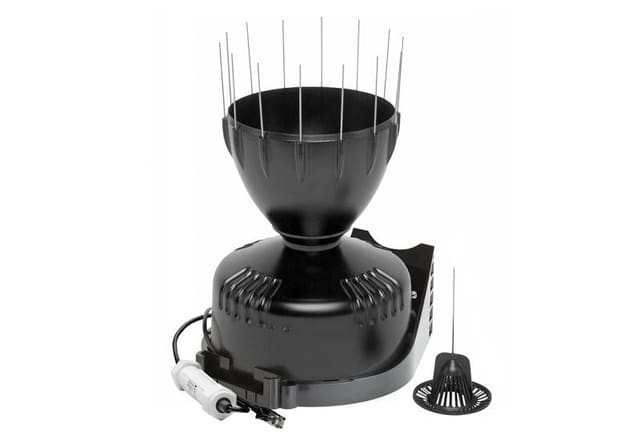
LI-COR (HOBO, InTemp, LI-COR) · S-RGF-M002
Davis® 0.2 mm Rain Gauge Smart Sensor
The Davis® Rain Gauge Smart Sensors features the new AeroCone® design, for better measurement accuracy in high-wind conditions. This gauge is made from UV-stabilized ABS plastic to provide a cost-effective sensor for rainfall measurement, and is plug-and-play…
Keep reading
Week in review, 21 to 25 September 2026: a four-month summer and a rain gauge ready to close the hydrological year
The week in four signals and the tipping-bucket rain gauge guide, three European signals with their sources (Spain's warmest summer since at least 1869, Spanish reservoir storage and the new European Water Academy) and the close of the hydrological year on 30 September.
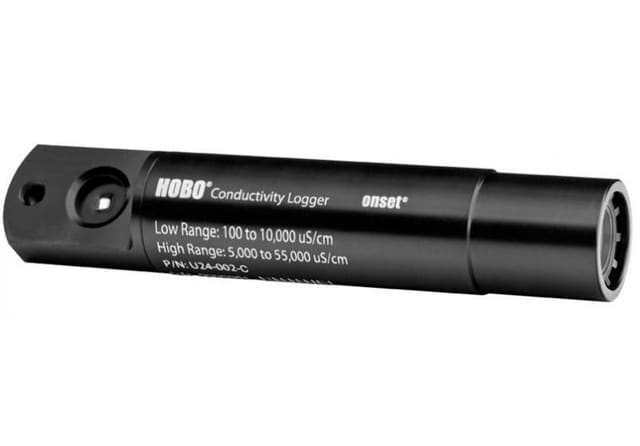
How long does biofouling take to spoil a conductivity record? What a study with moored sensors in the Baltic measured
In a study off the southern Baltic coast, a conductivity sensor moored at 2 m with a used TBT cell was out of specification at the first comparison after deployment, on day 32; with a UVC emitter, the last references, after 237 days, were within the margin. What this changes when planning visits and references.
How long did the leaves stay wet? Where to put the sensor and how to set the threshold so the data are usable
Hours of leaf wetness feed many disease warnings, yet there is no standard way to measure them. Where to put the sensor, at what angle and orientation, whether to paint it and how to set the threshold with your own observations.