
Weather monitoring · Water · Rainfall
Week in review, 21 to 25 September 2026: a four-month summer and a rain gauge ready to close the hydrological year
The week in four signals and the tipping-bucket rain gauge guide, three European signals with their sources (Spain's warmest summer since at least 1869, Spanish reservoir storage and the new European Water Academy) and the close of the hydrological year on 30 September.
If your rain gauge has gone through the summer recording almost no rain, this week offers two reasons to check it before Wednesday 30 September: AEMET confirms that summer 2026 was Spain's warmest since at least 1869, and the Spanish hydrological year ends that day. Here is what we published, what happened in Europe and what is coming.
What we published this week
Week of 21 to 27 September 2026: summer lingers and rain has no date yet: four official signals for a week of full summer and, for each, what to measure and with what care, starting with the rain gauge.
When it rains hardest, it misses most: height, calibration and maintenance of tipping-bucket rain gauges: why this type of gauge loses rain to wind and to its own mechanics, and what to decide about installation height, calibration and maintenance.
Three signals from Europe
Summer 2026 was Spain's warmest since at least 1869. AEMET published its assessment on 21 September 2026: in mainland Spain the mean summer temperature was 24.5 °C, 2.4 °C above the 1991-2020 average and 0.3 °C above summer 2025; it is the warmest in the official series, which begins in 1961. Mean precipitation was 39.6 mm, 56% of normal, making it the third driest summer in that series. AEMET adds that fully summer-like conditions lasted four months. Source: AEMET. Why it matters: a rain gauge that has barely received rain for months has had no chance to show that it tips correctly, and a temperature sensor that has spent four months in the sun deserves a check of its shield before its data are taken at face value.
Spanish reservoir storage at 61.8% of capacity. That was the figure highlighted on 22 September 2026 by the weekly Hydrological Bulletin of Spain's Ministry for the Ecological Transition (MITECO), which compiles the volumes stored in mainland reservoirs larger than 5 hm³. Source: MITECO. Why it matters: it is a national aggregate; the level of your own tank, pond or well only comes from a measurement at that point, with a documented level reference, as we explained in Water level: preparing the measurement point.
The European Water Academy is launched. The European Commission launched it on 21 September 2026, and the Joint Research Centre (JRC) describes it as a network of networks linking the organisations that generate knowledge with those that apply it, including public authorities, universities, water utilities, industry and water professionals. It is a flagship action for water skills development under the European Water Resilience Strategy. Source: Joint Research Centre. Why it matters: the Commission lists the lack of relevant skills alongside climate change, pollution, mismanagement and ageing infrastructure among the challenges facing Europe's water; anyone who manages or measures water should keep an eye on the training it offers.
What is coming
Wednesday 30 September: the Spanish hydrological year 2025-2026 ends. AEMET notes that it began on 1 October 2025 and that, up to 15 September, mainland Spain had accumulated 643 mm, 6% above normal. A year slightly above normal with a very dry summer: the annual total does not say how the rain was distributed. What to do: download the rain gauge record that day, note the total together with the date of the last maintenance, and open the new series on 1 October. Compare your total with the mainland average only as context, never as a reference for your own point. Source: AEMET.
A new MITECO Hydrological Bulletin. The bulletin is weekly, so the next edition will update the 61.8% of 22 September. Source: MITECO.
Further ahead, 26 October: the MARS bulletin on crop monitoring in Europe. Date taken from the Joint Research Centre's own schedule. Source: JRC MARS Bulletin.
Commercial selection by EIC Controls
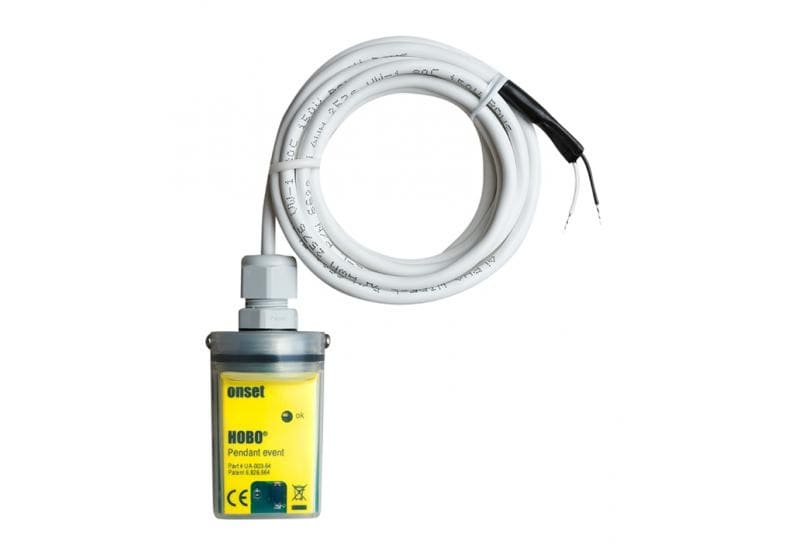
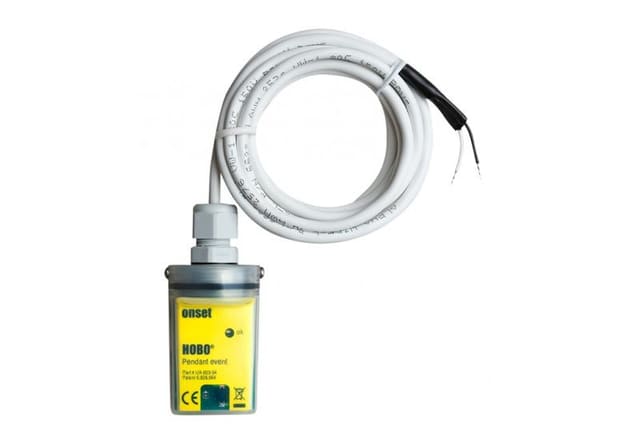
The HOBO Pendant® Event Data Logger (UA-003-64) is intended, according to its datasheet, for recording rainfall with tipping-bucket rain gauges: it stores each tip with its time, as well as temperature, and event data are only stored when an event occurs. It is relevant at the close of the hydrological year because it keeps the individual rain events and their intensity, not just the total. Still to be sized: the rain gauge it connects to, since it is a logger and not a complete rain gauge; the scaling to millimetres according to that gauge's resolution; the battery (the datasheet gives one year of typical use); and, if the temperature is to be used in sunlight, a radiation shield, which the datasheet requires for accurate measurements.
View datasheet · Talk to a specialist
References
- AEMET (2026). "Un verano de cuatro meses bate récords de calor en, al menos, siglo y medio". aemet.es. Accessed 25/09/2026, around 06:45 (Madrid time).
- Ministerio para la Transición Ecológica y el Reto Demográfico (2026). "Boletín Hidrológico" (highlight of 22/09/2026). miteco.gob.es. Accessed 25/09/2026, around 06:45 (Madrid time).
- European Commission, Joint Research Centre (2026). "The European Water Academy for a water-resilient Europe". joint-research-centre.ec.europa.eu. Accessed 25/09/2026, around 06:45 (Madrid time).
- European Commission, Joint Research Centre (2026). "JRC MARS Bulletin". joint-research-centre.ec.europa.eu. Accessed 25/09/2026, around 06:45 (Madrid time).
Instruments for this application
LI-COR (HOBO, InTemp, LI-COR) · UA-003-64
HOBO Pendant® Event Data Logger
Accurately measure rainfall with the HOBO Pendant Event Data Logger. Determine rainfall rates, times, and duration after deployment with most standard tipping-bucket rain gauges. Efficiently gather and store momentary contact events and temperature data.…
Keep reading
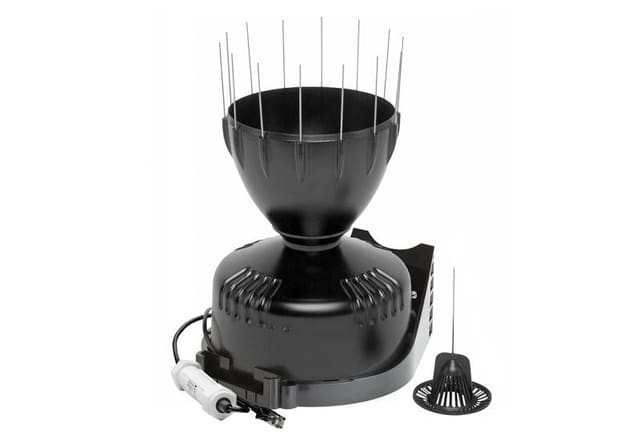
When it rains hardest, it misses most: height, calibration and maintenance of tipping-bucket rain gauges
A tipping-bucket rain gauge loses rain to wind and to its own mechanics, and the second loss grows with intensity. What four peer-reviewed studies say about installation height, dynamic calibration and maintenance.
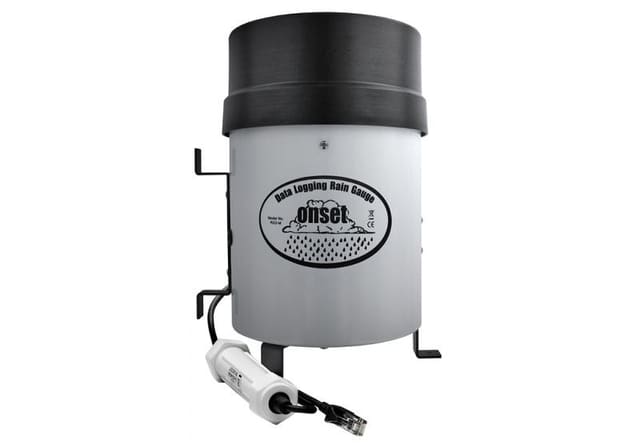
Week of 21 to 27 September 2026: summer lingers and rain has no date yet. What to measure, and with what care
AEMET expects a week of full summer, with little rain until at least Friday 25th, and an autumn probably warmer than normal. Four official signals and, for each, what to measure and with what care, starting with the rain gauge.
August 2026 in Europe: dry surface soil, low rivers and what to measure now
On 10 September, Copernicus published its August 2026 bulletins: exceptionally dry surface soils and river flows well below average across much of Europe. What those maps support deciding, and what they do not.