
Week of 14 to 20 September 2026: late-season heat, dryness and fire danger. What to measure, and with what care
AEMET, IPMA, Copernicus, EFFIS and the European Drought Observatory agree: summer carries on across the Iberian Peninsula this week. Four official signals and, for each, what is worth measuring and with what care.
Consulted on 13 September 2026 at 00:05 (Madrid time; 22:05 UTC on 12 September). The forecasts and warnings cited belong to the services that issue them and may have been updated since.
Anyone running a field, a warehouse or a sensor network in the Iberian Peninsula starts the week with one question: does summer carry on? The official services agree — it does — and that shapes what to measure and with what care.
Signals of the week
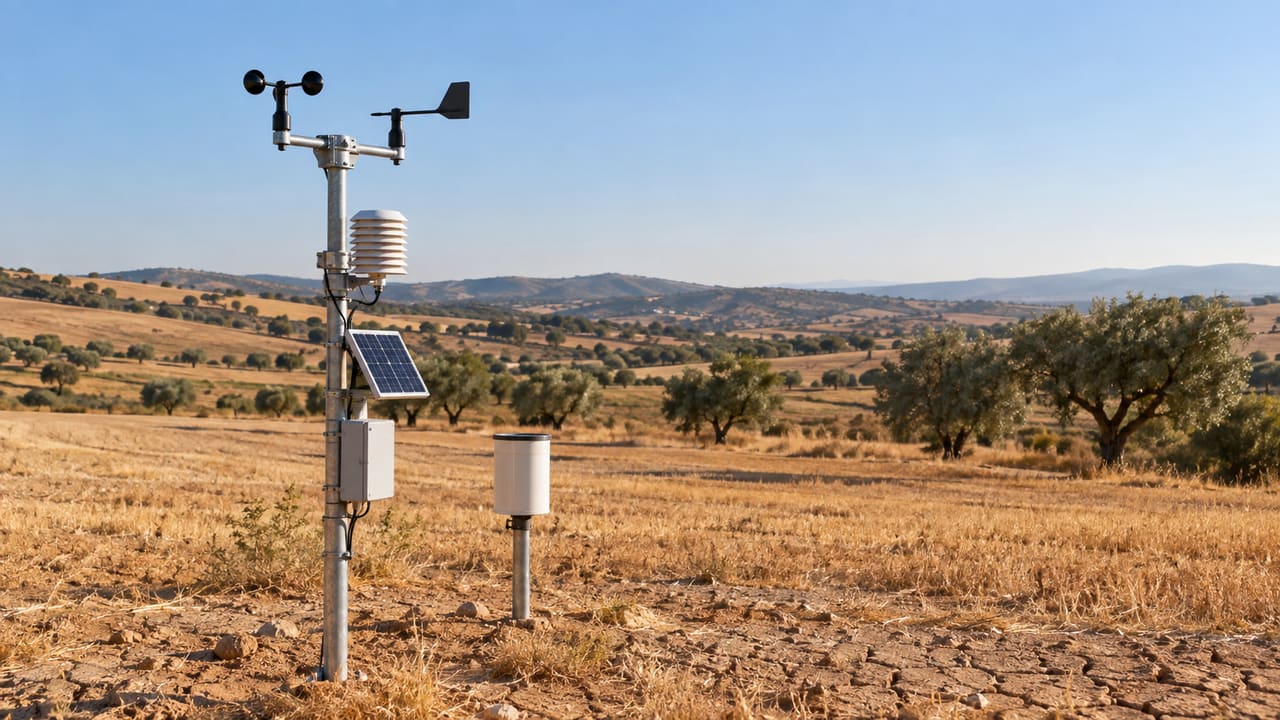
1. High-summer heat and scarce rain from 14 to 20 September. AEMET expects anticyclonic, settled weather, with maxima that "superarán los 32 a 35 °C en buena parte de la Península y en el sur de las islas canarias" (will exceed 32 to 35 °C across much of the Peninsula and the south of the Canary Islands) and scarce precipitation; for the following week it warns of greater uncertainty. In Portugal, at the time of consultation IPMA held warnings for "persistência de valores elevados da temperatura máxima" (persistence of high maximum temperatures). Source: AEMET, forecast for 14 September to 4 October (11/09/2026); IPMA, weather warnings. What to measure: air temperature and relative humidity where it matters (crop, warehouse, cold room), with a radiation shield and a logging interval that captures the afternoon maximum and the night-time minimum; in unconditioned interiors, the night-time temperature decides whether the building cools down or stores heat day after day. With what care: without a shield, the reading includes the sensor's own heating in the sun; a maximum forecast for a region is not the maximum of your plot; and no local record replaces the official warning, which is updated.
2. August 2026, the joint warmest month on record. According to Copernicus (C3S/ECMWF, ERA5 data), August 2026 tied with July 2023 as the warmest month ever recorded, 1.65 °C above the pre-industrial level; Western Europe had its warmest summer on record, above 2003, and the average temperature over European land in August was 20.26 °C, 1.10 °C above the 1991-2020 average, with widespread dryness. Source: Copernicus Climate Change Service, press release of 10/09/2026. What to measure: if you compare your series with "normal", fix the reference period (Copernicus uses 1991-2020) and document it alongside the data. With what care: ERA5 is a gridded reanalysis, not a station; a local anomaly needs a long series of your own, or a nearby official station, as a reference.
3. Extreme fire danger in the Iberian Peninsula. EFFIS (JRC) expected extreme fire danger for the Iberian Peninsula and the Pyrenees over 10 to 16 September; up to 9 September the area burnt in the EU in 2026 stood at 657 511 ha, against an average of 338 163 ha for 2006-2025. Source: JRC, current wildfire situation in Europe (11/09/2026) and EFFIS, fire danger forecast (FWI index computed from numerical weather forecasts). What to measure: relative humidity, wind and rainfall at your own site, to interpret locally what the regional index cannot resolve. With what care: the official level is computed by EFFIS; a station of your own neither reproduces it nor replaces civil-protection decisions.
4. Stable drought, and a caveat on soil moisture. The European Drought Observatory (JRC) reported, with mid-August data, stable and critical drought across most of Europe, with small improvements in the west and a partial recovery in the southern Iberian Peninsula; the observatory itself warns of known issues, under investigation, in its soil-moisture estimate and recommends complementing it with the SPI and SPEI indices. Source: JRC/EDO, current drought situation in Europe (26/08/2026). What to measure: soil moisture in situ at the depths that drive irrigation, and rainfall on the plot, because precipitation indices are computed from what falls there. With what care: soil sensors may need soil-specific calibration, and a satellite or model product describes a grid cell, not your field.
Checklist
- Date and time of each consultation recorded alongside the data.
- Temperature and humidity sensor fitted with a radiation shield.
- Logging interval able to capture daily maxima and minima.
- Reference period defined before talking about anomalies.
- Depth and calibration documented for every soil sensor.
Limits
This note is not a forecast by EIC Controls: the forecasts belong to AEMET, IPMA, Copernicus, EFFIS and the European Drought Observatory, on the dates given. No forecast tables, maps or series are reproduced, and nothing above replaces official warnings.
References (accessed 13/09/2026)
- AEMET (2026). Predicción para las semanas del 14 de septiembre al 4 de octubre de 2026: official blog · PDF document.
- IPMA (2026). Avisos meteorológicos: ipma.pt.
- Copernicus Climate Change Service / ECMWF (2026). Copernicus: August was the world's joint hottest month on record, pushing global temperatures back above 1.5°C above pre-industrial levels: climate.copernicus.eu.
- Joint Research Centre (2026). Current wildfire situation in Europe (EFFIS): link · Fire danger forecast: link.
- Joint Research Centre (2026). Current drought situation in Europe (European Drought Observatory): link.
Commercial selection by EIC Controls
The HOBO GSM/GPRS Weather Station Basic Kit brings together the RX2102 logger, a temperature and relative-humidity sensor with radiation shield, a wind speed and direction sensor and a rain gauge: the variables this week calls for. Still to be sized are the installation point, the tripod and the mobile coverage at the site. View datasheet
Instruments for this application
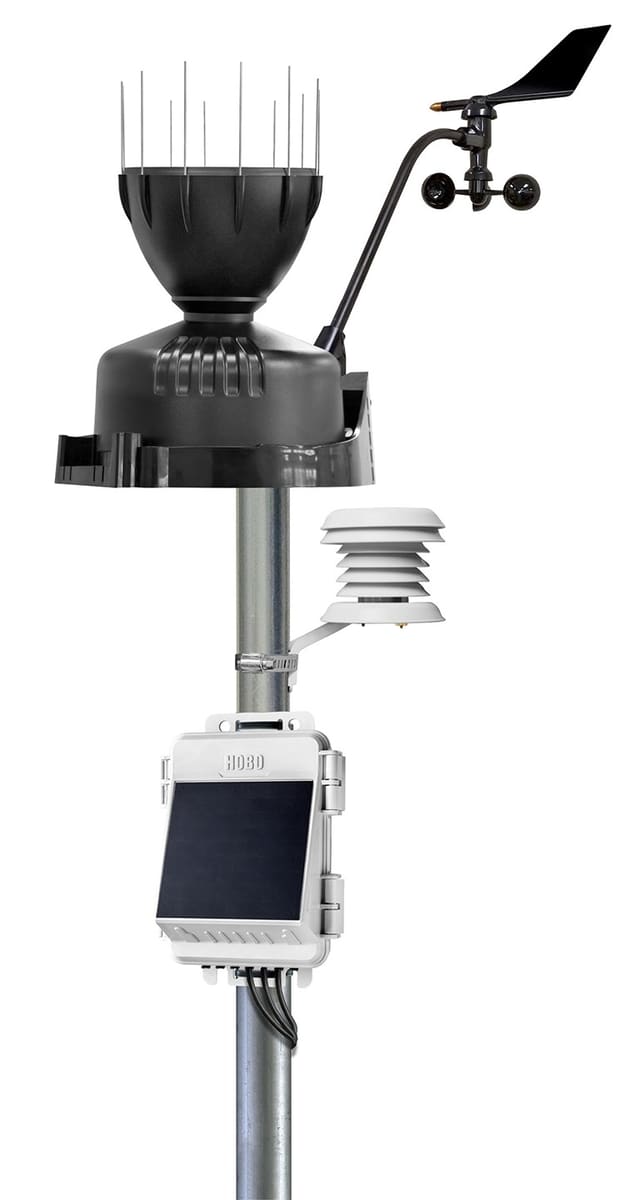
LI-COR (HOBO, InTemp, LI-COR) · KIT-BASIC-RX2102
Kit Basico para la Estación Meteorológica HOBO via GSM/GPRS
Keep reading
Week in review, 14 to 18 September 2026: your own point, the satellite and the laboratory curve
Three articles on what makes a number measured at one point trustworthy, three European signals from the week with their sources, and what is due in the coming days.
Sentinel-3C is in orbit: what a satellite measures and what your station still measures
On 15 September 2026 the European Union launched Copernicus Sentinel-3C. What it observes from 800 km, why land surface temperature is not air temperature, and what to log at your own point.
Why two identical sensors do not read the same: choosing a radiation shield
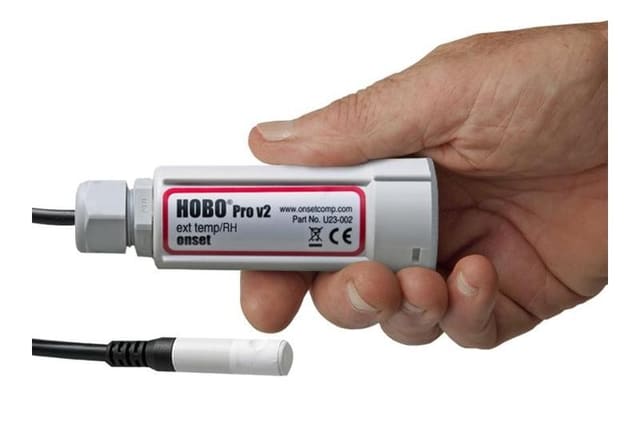
The shield around the sensor can contribute more error than the sensor itself. What two peer-reviewed studies say about natural ventilation and forced aspiration, and what to document so the series is usable.