
Data logging · Weather monitoring
Changing site or instrument without breaking the record: lessons from the Montseny summit series (1950-2025)
On 31 October 2026 AEMET and the SMC published an analysis of the Montseny summit series, which joins two sites and fills the gaps from 2001 to 2010. What it teaches anyone planning to move a station or change a sensor.
If you are planning to move your station a few hundred metres, change the sensor or replace the logger, the practical question is whether the data afterwards will still be comparable with the data before. A series just presented by AEMET and the Servei Meteorològic de Catalunya (SMC) shows how hard that question is to answer when the old and new sites never measured at the same time.
The fact
On 31 October 2026, the AEMET blog published an analysis by José Luis Camacho Ruiz (AEMET) and Marc Prohom Durán (SMC) of the climate and the history of observations on the summit of Montseny, in Catalonia, covering 1950 to 2025 (Aemetblog, 2026). The authors present a selection of the results: the full study is in a joint AEMET and SMC technical note that is still under review, and it does not include 2026 data.
Context: two sites and a stretch with gaps
The series does not come from a single point. The observatory stood on Turó de l'Home, at 1,707 m. The then national meteorological institute (INM) officially closed it in 2004 and, on 22 September 2010, the SMC installed an automatic station on Puig Sesolles, at 1,668 m and about 300 m away in a straight line. The data come from AEMET for 1950-2001 and from the SMC since 2010: the two periods do not overlap.
According to the text, there have been instrument changes and periods with no observations. So the authors built a synthetic series from the original data of both sites, using nearby observatories with significant correlation to fill the gaps. They applied daily quality control and relative homogenisation using the ACMANTv5.1 method; the method filled, above all, the 2001-2010 gaps and corrected the jumps linked to instrument changes, particularly in the measurement of maxima from 1982 onwards.
One figure sums it up. The absolute minimum measured with the instrument of the time was -19.8 °C; in the homogenised series it appears as -19.5 °C (2 February 1956), because the process adjusts the series to the conditions of the station's current location.
With that series, the annual mean maximum temperature rises by 0.33 °C per decade and the mean minimum by 0.26 °C per decade; in summer, by 0.51 and 0.36 °C per decade. Frost days fall from 112.6 a year in 1951-1980 to 93.7 in 1991-2020, and ice days from 24.4 to 17.6. For precipitation, the results are not conclusive in annual, seasonal or monthly totals, although the summer decline, of 8.8 mm per decade, reaches the 95% significance level.
What it means for anyone who measures
1. A value in a homogenised series is not the thermometer reading. If you compare an extreme at your station with a long official series, a difference of a few tenths, like the 0.3 °C of the Montseny absolute minimum, may come from the homogenisation, not from your sensor. Before comparing, check whether the series holds original or homogenised data and which site it refers to. It adds to what we wrote on what to check in your series before comparing it with AEMET.
2. Moving the site means starting another series. On Montseny, two sites about 300 m apart, with a 39 m difference in altitude, with no common measurement period, were joined by building a synthetic series with the help of neighbouring stations. If you are going to move your station, measure at both points at the same time for a while: that way you know the difference instead of having to estimate it. Record the date, coordinates, altitude and surroundings of each site.
3. Changing how you measure also leaves a mark. The jumps corrected from 1982 onwards affected the measurement of maxima. With a logger, the equivalent is changing the sensor, the shield or the logging interval: note it with the date and keep the original data untouched, with any corrections kept separately. We covered this in more detail with a study of 55 UK stations.
4. Gaps come at a price. Those of 2001-2010 were filled with data from nearby observatories with significant correlation. A private network rarely has that backing, so it pays to plan downloads, batteries and a spare unit so that the record is not interrupted. The authors put it this way: "Preservar la continuidad de la serie es esencial para monitorizar el cambio climático" (preserving the continuity of the series is essential for monitoring climate change).
What is not yet known
- The full study, in a joint technical note, is still under review.
- AEMET and the SMC still have to assess the quality of the oldest observations, in order to extend the series back to the early 1940s and attempt to link it to the 1930s.
- The text does not say which instrument changed in 1982 or how much each section was corrected, beyond the example of the absolute minimum.
- The series ends in 2025. The article itself notes that 202.4 mm were recorded on 3 October 2026, above the values of the period studied, whose daily maximum was 189.6 mm (21 April 2020).
- These are figures for a summit at about 1,700 m: they do not transfer to another site or another altitude.
References
- Camacho Ruiz, J. L. and Prohom Durán, M. (2026). "Clima e historia de las observaciones meteorológicas en la cumbre del Montseny. Serie 1950-2025". Aemetblog (AEMET), 31 October 2026. https://aemetblog.es/2026/10/31/clima-e-historia-de-las-observaciones-meteorologicas-en-la-cumbre-del-montseny-serie-1950-2025/. Accessed 4 November 2026, 05:45, Madrid time.
Source of the climate data: AEMET and SMC.
Commercial selection by EIC Controls
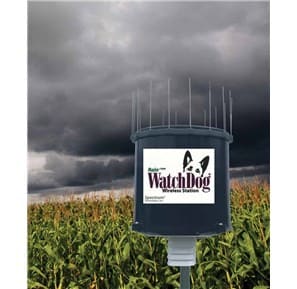
The WatchDog wireless rain and temperature station measures temperature and rainfall in a single unit, with a radiation shield and a rain gauge of 20.3 cm diameter and 0.25 mm resolution, and logs every hour, sending the data over the Sigfox network. When moving a station, it can measure at the new site while the old one keeps running. Still to be sized: Sigfox coverage at your location, whether hourly logging and ±0.5 °C accuracy are enough for your maxima and minima, and the mounting.
Instruments for this application
Spectrum Technologies · 3200R1
WatchDog Wireless Rain + Temperatura Station
Click here to see if Sigfox coverage is available in your location! France, Germany, Italy, Spain, Portugal, United Kingdom, Ireland, Belgium, Hungary, The Netherlands, Luxemburg, Czechia, Slovakia, Croatia, Denmark, Finland, Estonia, Sweden, South Africa,…
Keep reading
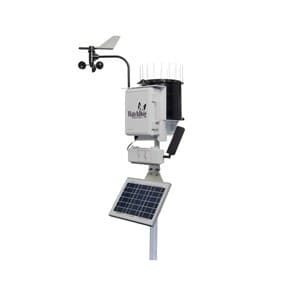
The Commission proposes a common warming trajectory for climate risk assessments: what to measure at your site to read it
On 27 October 2026 the European Commission proposed the European Climate Resilience Law, with a reference global warming trajectory and periodic risk assessments. What that information describes, what it does not describe about your site and what is worth recording.
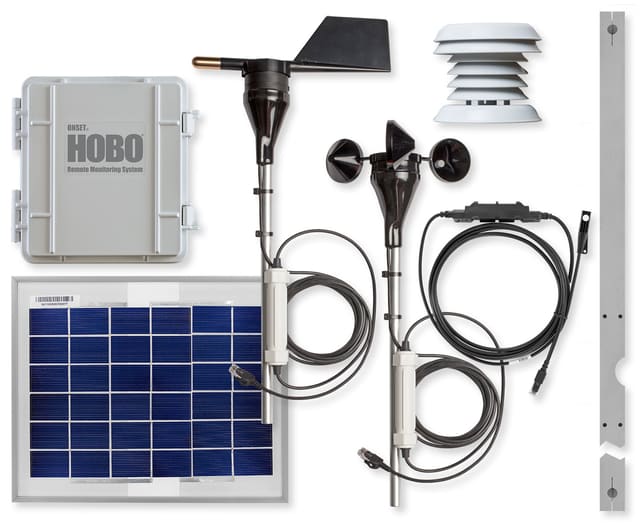
Week in review, 19 to 23 October 2026: from the 9 km grid to your plot
The week's four pieces (water level, frost, the warmest September and dendrometers), three European signals with their sources (ECMWF's open 9 km data, AEMET's analysis of the Catalonia rainfall and drought according to the JRC) and what is coming: the end of summer time on the 25th and the MARS Bulletin on the 26th.
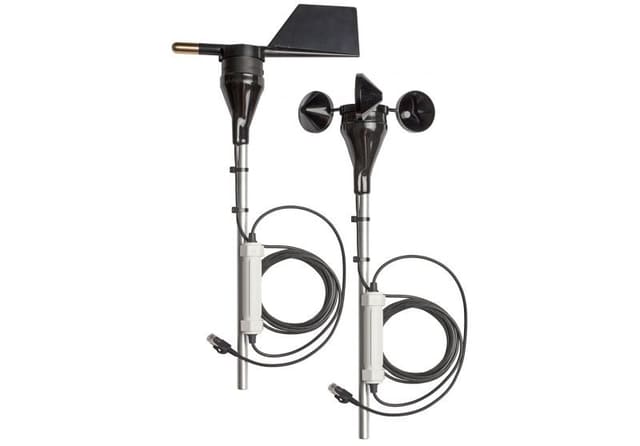
Week in review, 5 to 9 October 2026: what the thermometer does not see
The week's four pieces, three of them on what the thermometer does not measure, three European signals with their sources, and what is coming: the Environment Council on 12 October, the September summaries still to be published and the end of summer time on 25 October.