
Week of 19 to 25 October 2026: torrential rain on the Mediterranean coast and little rain in the north-west. What to measure and with what care
AEMET has a special warning in force for very heavy, persistent showers on the Spanish Mediterranean coast and the Balearic Islands until Monday, with a risk of flash floods, and expects little rain in the north-west. Four official signals and what to measure for each, with water level at the centre.
Consulted: 19 October 2026, 06:50 (Madrid time). The forecasts and warnings belong to the services cited and may have been updated since.
The week begins with a special warning from AEMET, the Spanish meteorological agency, for very heavy rain on the Spanish Mediterranean coast and the Balearic Islands, and with little rain forecast in the north-west. If you log water level in a stream, a dry riverbed or a well, both extremes call for the same thing: knowing what the logger actually measured before you use the data.
Signals of the week
1. Cut-off low Adam: very heavy, persistent showers until Monday. AEMET special warning 37/2026 (Sunday 18 October, 13:39) forecasts very heavy and persistent showers and thunderstorms over the Mediterranean area of the peninsula and the Balearic Islands until Monday 19 October, and warns of flash floods in streams and ramblas (dry riverbeds that fill suddenly). Source: AEMET, special warning 37/2026.
What to measure: if you have a level logger in a watercourse, the full record of the episode, with the time of the highest value. With what care: do not go to the site while the warning is in force; the download can wait. Afterwards, check that the logger is still in place, submerged and not buried, and note any displacement before you touch it. A flash flood can rise and fall between two readings: with a long logging interval, the highest recorded value may fall short of the real peak.
2. From Tuesday, less rain and normal temperatures. According to the special warning, instability is likely to ease from Tuesday 20 October. AEMET's weekly forecast adds that temperatures will generally stay around normal values for the time of year and, for the following week, that uncertainty increases considerably. Source: AEMET, forecast for the weeks from 19 October to 8 November (16/10/2026).
What to measure: on the visit afterwards, a manual reading of the level next to the logger, with date and time. With what care: a non-vented logger measures absolute pressure, that of the water plus that of the air; the level is obtained afterwards by compensating with barometric pressure for the same period and with that reference reading. Without barometric data covering the whole episode, the flood cannot be reconstructed properly. If you take the logger out to download it, when you put it back wait, before the reference reading, for the time its datasheet states: for the one in the commercial selection, 20 minutes for the sensor's temperature compensation.
3. Little rain in the north-west. For the same week, AEMET expects precipitation to be scarce in the north-west of the peninsula. For mainland Portugal, the IPMA monthly forecast points, for precipitation, to "valores abaixo do normal no Norte e Centro" (below-normal values in the North and Centre). Source: AEMET, weekly forecast (16/10/2026).
What to measure: that the level logger in a low-flow stream is still covered by water. With what care: out of the water, a pressure logger keeps recording, but air pressure and air temperature: after compensation, the water depth over the sensor comes out close to zero and the temperature follows the daily air cycle. Flag that period and keep it out of the series (our guide to river water temperature).
4. Copernicus looks ahead to winter. In its summary of 10 October, Copernicus notes that "the ongoing El Niño event is the main feature in the latest C3S seasonal forecasts" and that, for the coming European winter, above-average seasonal means for temperature and precipitation are favoured across most of the continent, with the weakest signal over Scandinavia and, for precipitation, over southern regions. Source: Copernicus C3S/ECMWF, seasonal forecasts.
What to measure: nothing different this week. With what care: this is a probability for seasonal means over large regions, not a forecast for your site or for a given week.
Checklist
- With a warning in force, stay away from the site: warnings from AEMET and IPMA.
- Level logger: position checked, data downloaded and a manual reference reading taken with date and time.
- Barometric data covering the whole logged period.
- Periods out of the water or with the logger displaced, flagged.
- Rain gauge: peak intensity compared with the datasheet (our note of 5 October).
Limits of this note
This is not an EIC Controls forecast: the warnings and forecasts are from AEMET and IPMA, and the seasonal forecast is from Copernicus C3S/ECMWF. The warning cited was the latest special warning published at the time of consultation. When a warning is in force, follow the instructions of the meteorological service and civil protection.
References
- AEMET (2026). Aviso especial de fenómenos adversos número 37/2026. Chubascos y tormentas muy fuertes y persistentes. Issued 18/10/2026 at 13:39 (consulted: 19/10/2026).
- AEMET (2026). Predicción para las semanas del 19 de octubre al 8 de noviembre de 2026. Aemetblog, 16/10/2026 (consulted: 19/10/2026).
- IPMA (2026). Boletim de previsão mensal, Continente, 19/10 a 15/11/2026. Reference date: 14/10/2026 (consulted: 19/10/2026).
- Copernicus Climate Change Service (C3S), ECMWF (2026). Seasonal forecasts: highlights of the latest seasonal forecasts. 10/10/2026 (consulted: 19/10/2026).
Commercial selection by EIC Controls
To log water level and temperature in a stream, a well or a wetland, the HOBO water level and temperature data logger (0 to 9 m) measures absolute pressure with a design that needs no vent tube, down to about 9 m of water at sea level. According to its datasheet, the HOBOware Pro software converts that pressure into level, compensating for barometric pressure, temperature and water density, and the logging interval ranges from 1 second to 18 hours, with up to 8 user-defined intervals. Still to be defined: how it is secured in the watercourse, where the barometric data will come from, and how it will be set up and downloaded, since the datasheet states that this requires a shuttle or a base station.
Instruments for this application
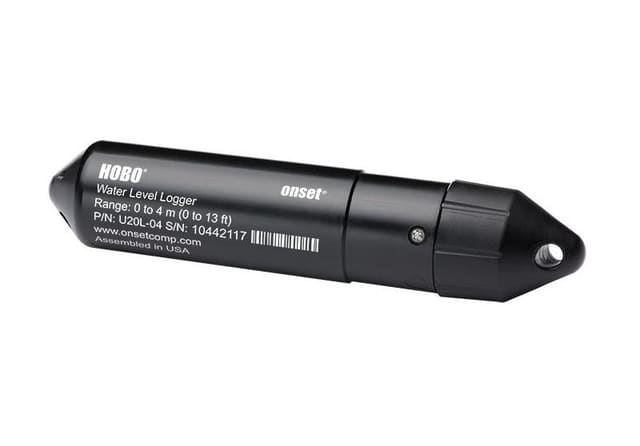
LI-COR (HOBO, InTemp, LI-COR) · U20L-01
HOBO Water Level (30 ft) Data Logger
The HOBO U20L-01 is a low-cost, research-grade water level data logger for continuously measuring water level and temperature in a wide range of underwater environments. It features 0.1% measurement accuracy, a polypropylene housing for use in both fresh and…
Keep reading
Changing site or instrument without breaking the record: lessons from the Montseny summit series (1950-2025)
On 31 October 2026 AEMET and the SMC published an analysis of the Montseny summit series, which joins two sites and fills the gaps from 2001 to 2010. What it teaches anyone planning to move a station or change a sensor.
Week of 2 to 8 November 2026: possible frosts inland in the north and rain on the Mediterranean. What to measure and with what care
AEMET expects a week that will probably be warmer than normal in southern Spain, with possible night frosts inland in the north and the heaviest rain in the Mediterranean area and the Balearics. Four official signals, including the new regionalised seasonal forecasts, and what to measure with each.
The Commission proposes a common warming trajectory for climate risk assessments: what to measure at your site to read it
On 27 October 2026 the European Commission proposed the European Climate Resilience Law, with a reference global warming trajectory and periodic risk assessments. What that information describes, what it does not describe about your site and what is worth recording.