
Week of 28 September to 4 October 2026: Atlantic fronts after a dry summer. What to measure and with what care
AEMET expects Atlantic fronts bringing rain, especially in the west, and locally heavy Mediterranean showers, after peninsular Spain's third driest summer since 1961. Four official signals and what to measure for each, starting with the soil.
Checked: 28 September 2026, 06:40 Madrid time. The forecasts and warnings belong to the services cited and may have been updated.
Anyone measuring rain, soil or air in Iberia faces a different question. On 18 September, AEMET, the Spanish State Meteorological Agency, saw no clear precipitation trend for these dates; its update of the 25th now brings Atlantic fronts after a very dry summer. The question now is how deep the water will reach at your point, and in how much detail it will be recorded.
Signals for the week
1. Fronts from the west after a very dry summer. For 28 September to 4 October, AEMET expects fronts linked to Atlantic lows to bring rain to the Peninsula, especially in the west. The summer was the third driest since 1961 in peninsular Spain, with mean precipitation of 39.6 mm, 56% of the 1991-2020 normal. For mainland Portugal, IPMA's seasonal forecast points, for precipitation, to an "anomalia positiva sobre a região Norte de Portugal Continental" (a positive anomaly over the north of mainland Portugal). Source: AEMET, weekly forecast (25/09/2026) and summer 2026 review (21/09/2026).
What to measure: soil moisture at several depths, during and after each rain event. The informative part is which levels respond, and in what order: if only the shallowest sensor reacts, the water has not reached the depth of the others. With what care: note each depth's value before the rain and read the change on the same sensor. Comparing absolute values between sensors depends on calibration for your soil, as we saw in a study on field calibration.
2. Locally heavy showers and an hourly warning threshold. AEMET expects showers in the Mediterranean area that could be locally heavy. The yellow rain warning it issued on Sunday 27 for the Axarquía (Málaga), valid from 07:00 to 19:59 (Madrid time) on Monday 28, sets its threshold at 15 mm of precipitation accumulated in one hour. Source: AEMET, warning of 27/09/2026 in CAP format and weekly forecast.
What to measure: rainfall with a timestamp, per event or at a short logging interval; a daily total cannot be compared with a threshold expressed per hour. With what care: logger clock set correctly and time zone noted (UTC or local time). The effect of intensity on a tipping bucket is covered in our rain gauge guide. Your record neither confirms nor refutes a warning: the warning describes an area and a probability; your gauge, a single point.
3. Warmer than normal, especially in the north-east. AEMET considers the week probably warmer than normal across most of Spain, especially in the north-east of the Peninsula, although without values as high as the previous week's. Source: AEMET, same forecast.
What to measure: air temperature and relative humidity at the same interval as rainfall, to see how the air changes with each event. With what care: when comparing with previous weeks, separate rainy days from dry days; a mean that mixes both describes neither.
4. High fire danger in France and Iberia. EFFIS, the European Forest Fire Information System, forecasts for 24 to 30 September very extreme fire danger anomalies across southern and central France and parts of northern Spain and Portugal, and extreme to very high fire danger across much of the Iberian Peninsula. As of 23 September, 678 978 ha had burnt in the EU since the start of the year, above the 2006-2025 average (355 397 ha). Source: EFFIS, European Commission Joint Research Centre, current situation (updated 24/09/2026 at 11:12 CEST).
What to measure: relative humidity, wind and air temperature at your station. With what care: the EFFIS forecast is European in scale and predates the AEMET forecast cited; in your area, its latest update and official warnings are what count. Your data describe your point; they do not replace that forecast.
Checklist
- Rain gauge: funnel clean, clock set correctly, record timestamped.
- Soil: each depth's value noted before the first rain event.
- Field notebook: start and end of each rain event, and any work on the equipment.
- Warnings: AEMET in Spain, IPMA in Portugal.
Limits of this note
This note is not an EIC Controls forecast: the forecasts and warnings belong to AEMET, IPMA and EFFIS. The summer figures are averages for peninsular Spain, not the state of the soil at any one point. If a warning is in force, follow the instructions of the meteorological service and civil protection authorities.
References
- AEMET (2026). Predicción para las semanas del 28 de septiembre al 18 de octubre de 2026. Aemetblog, 25/09/2026 (accessed 28/09/2026).
- AEMET (2026). Predicción para las semanas del 21 de septiembre al 11 de octubre de 2026. Aemetblog, 18/09/2026 (accessed 28/09/2026).
- AEMET (2026). Un verano de cuatro meses bate récords de calor en, al menos, siglo y medio. 21/09/2026 (accessed 28/09/2026).
- AEMET (2026). Aviso de lluvias de nivel amarillo. Axarquía. CAP message issued 27/09/2026 at 16:43 UTC (accessed 28/09/2026).
- European Commission Joint Research Centre, EFFIS (2026). Current wildfire situation in Europe. Updated 24/09/2026 at 11:12 CEST (accessed 28/09/2026).
- IPMA (2026). Previsão sazonal (accessed 28/09/2026).
Commercial selection by EIC Controls
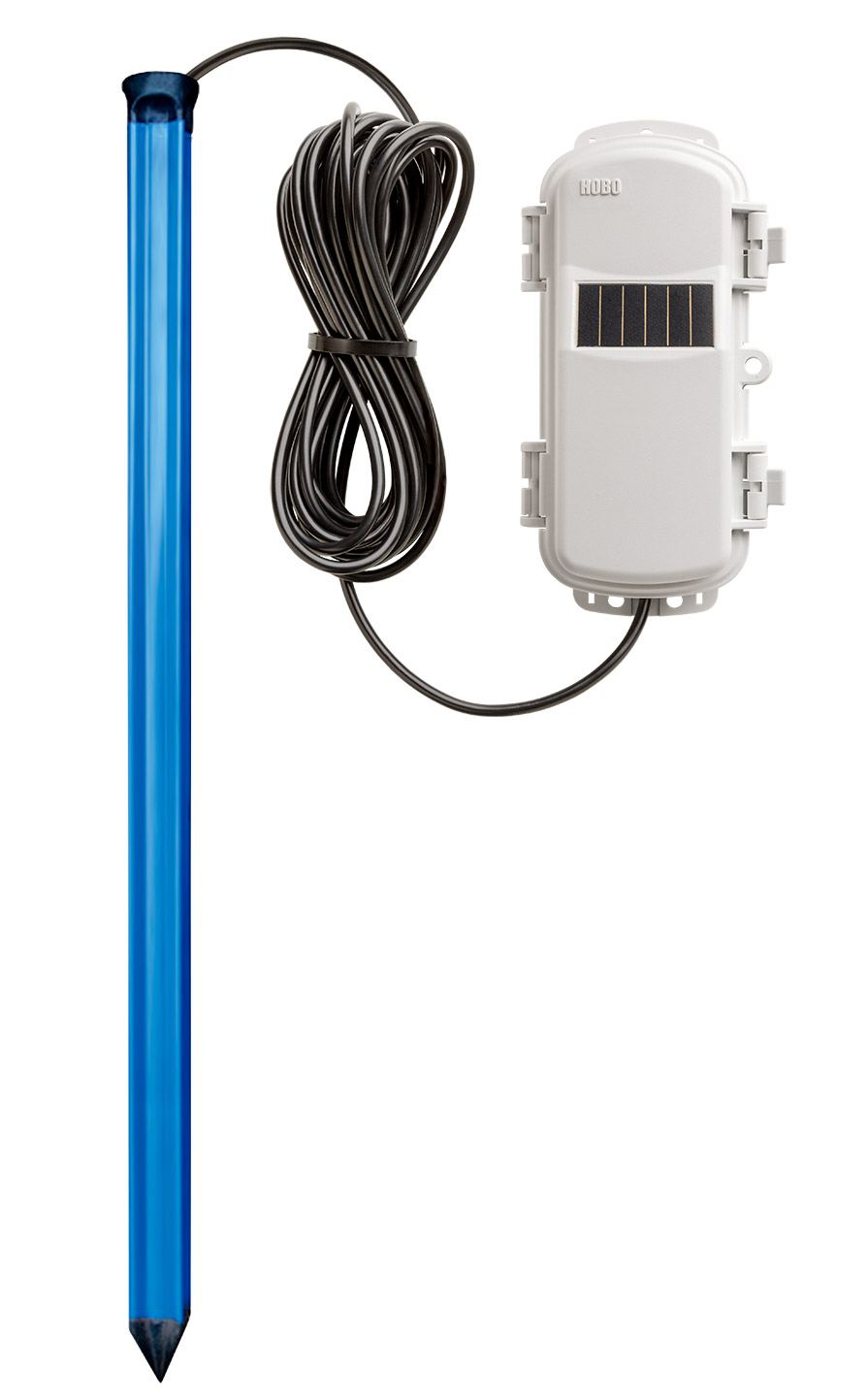
To see how deep the water from each event reaches, the 3-segment multi-depth soil moisture and temperature sensor (Europe) measures soil moisture along each segment of a single probe and soil temperature at several points. It is a wireless HOBOnet sensor: what remains is to check on the datasheet that the probe length covers the depth that matters to you, and to choose the HOBO RX station it joins and the installation point.
Instruments for this application
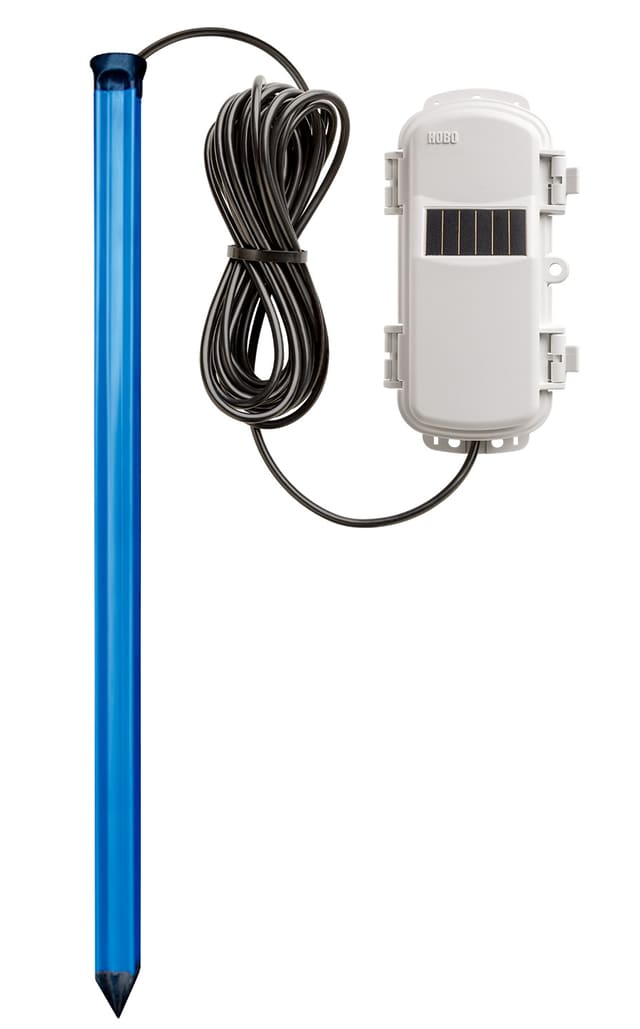
LI-COR (HOBO, InTemp, LI-COR) · RXW-GP3A-868
3 Segment Multi-Depth Soil Moisture and Temp. Sensor - Europe
An award-winning wireless sensor that works with the HOBOnet system to measure soil moisture and soil temperature at multiple depths with a single probe for fast and easy installation. This durable sensor is available in three probes lengths, for measurements…
Keep reading
Changing site or instrument without breaking the record: lessons from the Montseny summit series (1950-2025)
On 31 October 2026 AEMET and the SMC published an analysis of the Montseny summit series, which joins two sites and fills the gaps from 2001 to 2010. What it teaches anyone planning to move a station or change a sensor.
Week of 2 to 8 November 2026: possible frosts inland in the north and rain on the Mediterranean. What to measure and with what care
AEMET expects a week that will probably be warmer than normal in southern Spain, with possible night frosts inland in the north and the heaviest rain in the Mediterranean area and the Balearics. Four official signals, including the new regionalised seasonal forecasts, and what to measure with each.
The Commission proposes a common warming trajectory for climate risk assessments: what to measure at your site to read it
On 27 October 2026 the European Commission proposed the European Climate Resilience Law, with a reference global warming trajectory and periodic risk assessments. What that information describes, what it does not describe about your site and what is worth recording.